
WATER (LOWER VORAGON / UNDER-LONDON)
Recovered broadcast. Signal intermittently stabilised. Archive copy partially time-offset.
The stream resumes mid-sentence.
“…—don’t trust clarity.”
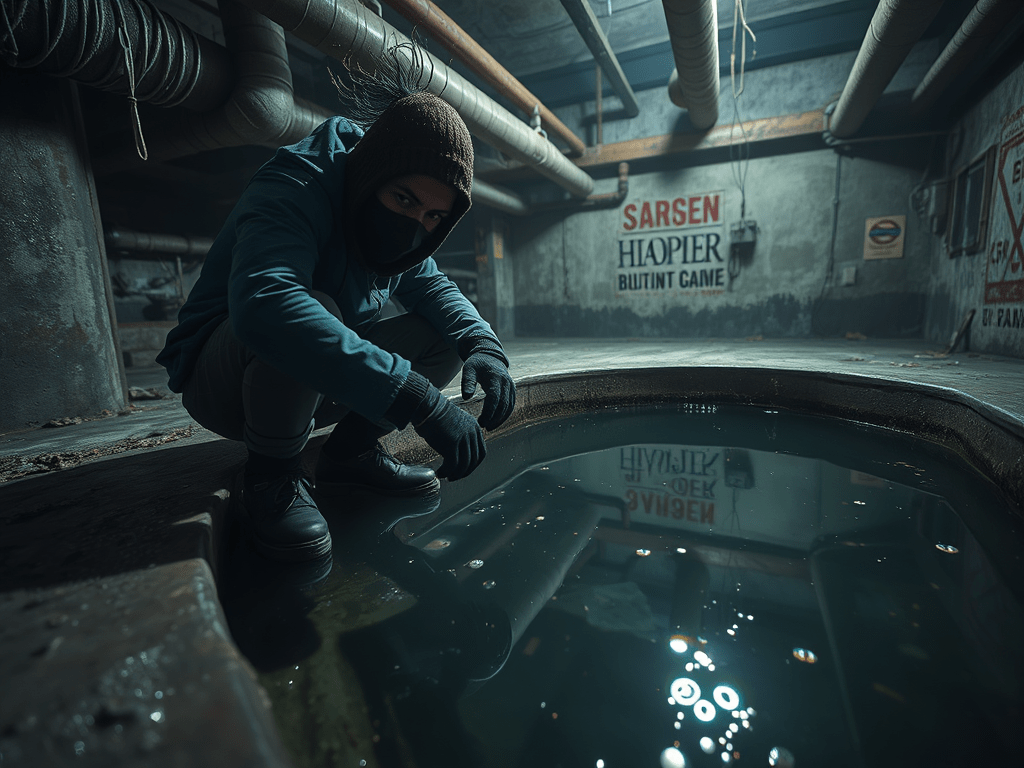
The image judders, then locks. The streamer is standing still this time, framed tighter than before. The ceiling is lower. Pipes run overhead, some wrapped, some bare, all sweating.
“Water module,” they say evenly. “This is about staying alive longer than you planned.”
They raise a hand into frame. Condensation gathers on the glove, beads merging, dropping.
“Rule one,” they continue. “If water is easy to reach, someone already owns it.”
They step forward. The sound of boots on metal. A grated walkway suspended above darkness. Below it, water moves—not fast, but with intention. The camera dips, catching the surface: oily rainbows, drifting debris, something pale passing just beneath.
“This isn’t a river,” the streamer says. “It’s a memory of one.”
The chat scrolls.
chat: is that sewage?
chat: thought all this was dry now
chat: how long u been down there
They crouch and unscrew a cap from a pipe, slow, listening as they do it.
“Municipal systems don’t die,” they say. “They fragment. You’re not looking for purity. You’re looking for predictability.”
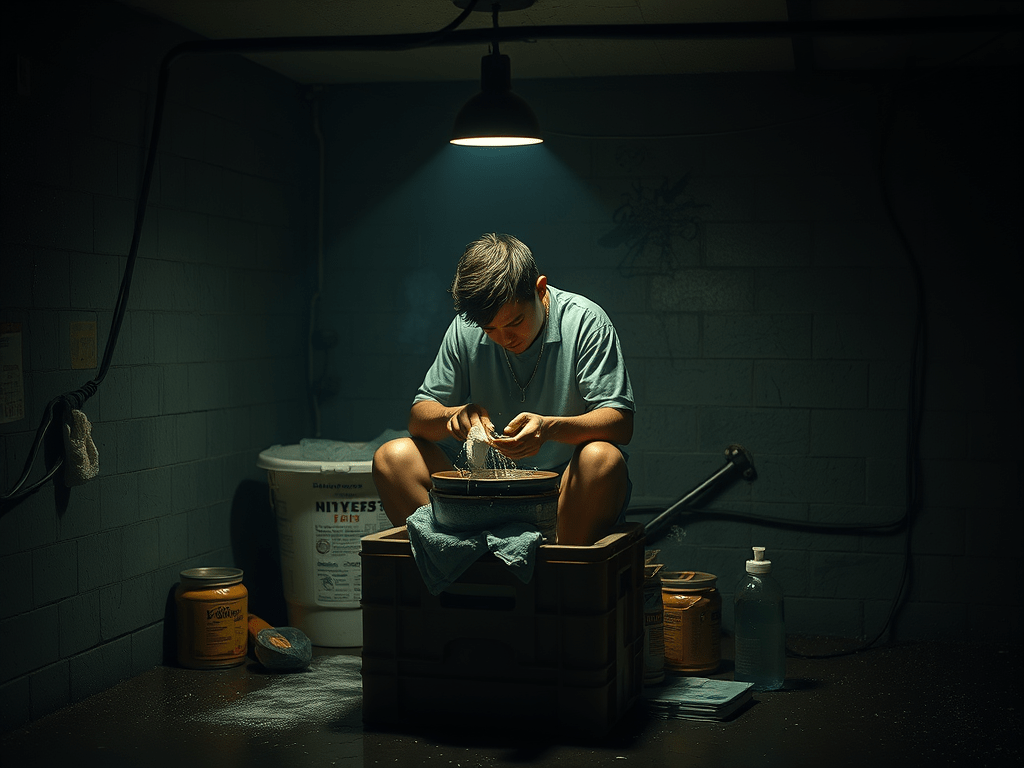
A thin trickle begins. The streamer holds a container beneath it—metal, dented, marked with scratches that look like measurements.
“Flow rate matters more than source,” they say. “Fast water lies. Slow water tells the truth, eventually.”
They cap the pipe again and move on, container sealed.
“Second rule,” they say. “Never drink where you sleep.”
The camera swings as they walk, catching glimpses of old signage, arrows pointing nowhere, a faded map sealed behind cracked glass. The words POTABLE IN EMERGENCY are visible, then gone.
“People used to think water was neutral,” the streamer continues. “That it didn’t take sides.”
They stop beside a shallow pool formed in a concrete depression. The light reveals sediment layers like rings in a tree trunk.
“This is communal water,” they say. “Which means it remembers everyone.”
They drop a strip into the pool. Wait. The strip changes colour slowly, reluctantly.
“Safe enough,” they say. “For now.”
The chat pulses.
chat: would u drink that
chat: don’t do it
chat: that’s mad
They pour a small amount through a filter, then pause.
“You don’t drink on camera unless you have to,” they say. “That’s not superstition. That’s economics.”
A beat.
“Water attracts attention. Thirst broadcasts need.”
They take a measured sip, anyway. No reaction. Just a swallow, logged by the body, not the face.
“Third rule,” they say. “Hydration changes behaviour.”
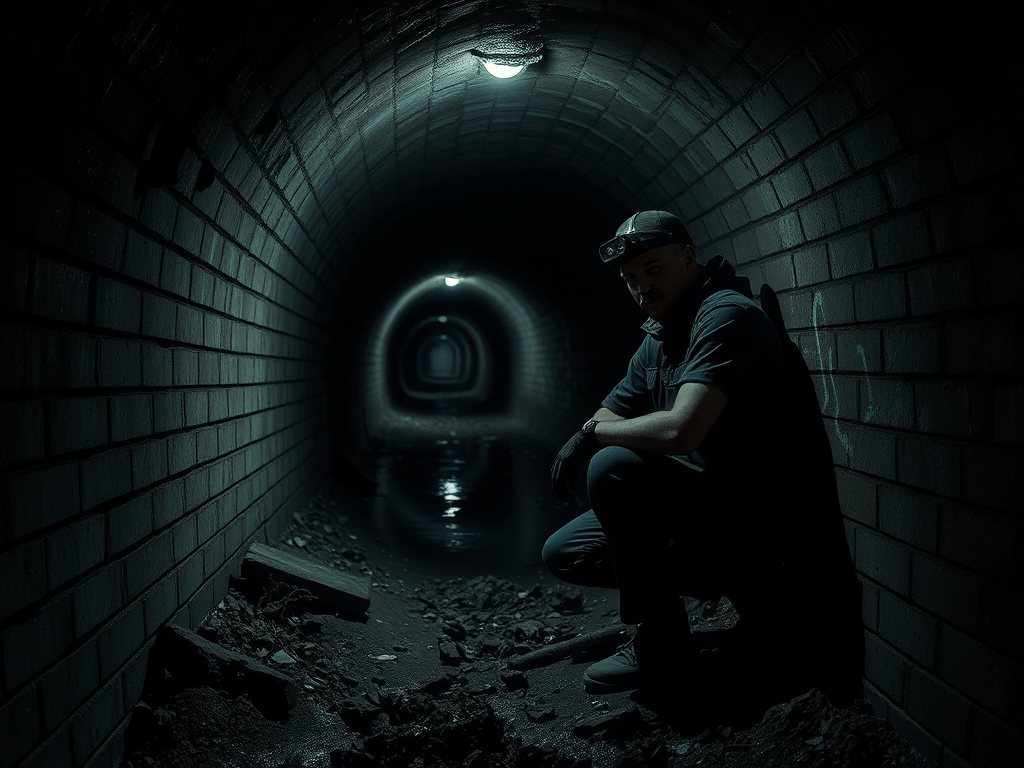
They pack up and move again, deeper now. The sound changes—dripping replaced by a low resonance, like distant chanting or turbines heard through water.
“This is where it gets complicated,” they say. “Some of you aren’t watching to learn. You’re watching to remember how this feels.”
The camera tilts toward a wall where moisture has condensed into shapes—faces, almost, then not. The image compression struggles.
“Water carries more than pathogens,” the streamer continues. “It carries habits. Routes. Old decisions.”
They tap the side of their head.
“If you drink long enough from the same place, you start thinking like it.”
The chat slows. Fewer jokes now.
chat: what do u mean
chat: sounds like BS
chat: keep going
They stop. Turn the camera toward themselves—not fully. Just enough to catch the lower half of the face, shadowed, indistinct.
“People ask why I stream this,” they say. “Why I don’t just do it quietly.”
A pause. The sound of water somewhere behind them grows louder, or closer.
“Because isolation kills faster than contamination,” they say. “And because visibility changes how systems treat you.”
They gesture outward, to the tunnels, the pipes, the unseen layers above.
“This water behaves differently when it’s being watched.”
A donation chime sounds. Then another. The container in their hand vibrates faintly, as if reacting.
“Final rule,” they say. “Never rely on a single source.”
They look directly into the lens.
“That includes me.”
The image stutters. A few frames repeat. The sound stretches, then snaps back.
“Module Two ends here,” they say. “Next time—cleaning.”
The stream cuts abruptly, mid-drip.
© B. C. Nolan, 2026. All rights reserved.
 English Voodoo
Leave a comment