

In Lower London, you could hear the lungs before the people.
A hundred thousand throats hissing through respirators, each inhalation metered and taxed. The air was owned now — filtered, condensed, and sold back through the Atmospheric Stability Network. They called it progress.
Every morning the smog descended like a sermon, and the poor rose to meet it, tethered to oxygen lines like livestock. The Agape turbines turned above them, converting love, devotion, and other human weaknesses into breathable air. Each sigh of longing, each whispered prayer — refined into the gas that kept the living from joining the dead.
Mia worked at the Turbine Exchange.
She spent twelve hours a day beneath the Furnace Mind’s orange glow, calibrating breath quotas for the eastside districts. Her lungs were weak — years of low-tier subscriptions had left scar tissue and carbon bruises. But she smiled through it. She always smiled.
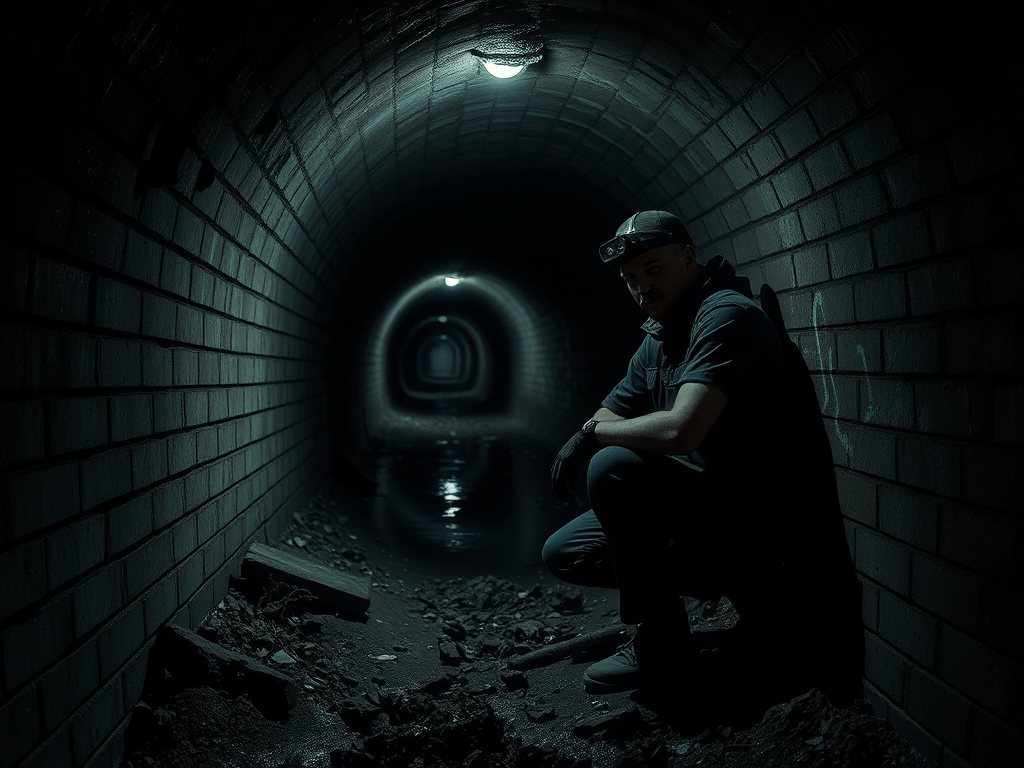
Nathan was a maintenance worker, one of the Pipewalkers. His job was to clear the ducts that fed air into the Agape stacks. He came home each night coated in black dust, smelling of static and iron, and collapsed beside her on the narrow cot they called a bed.
They couldn’t afford separate breathing plans.
Individual subscriptions had gone up again — the government citing “devotional inflation” and “rising emotional scarcity.” So they signed up for something new: The Love Plan™, a joint respiration model marketed to couples who believed in shared futures.
Two bodies, one subscription.
The contract merged their breath metrics through implanted Respiratory Nodes under the collarbone. The adverts showed smiling pairs beneath blue skies that hadn’t existed for generations. “Breathe as one,” it promised.
The installation was free. The maintenance was not.
When they left the clinic, their necks still raw from the punctures, the Nodes blinked in unison — two small silver lights glowing through the skin. Mia laughed. Nathan coughed. They walked home hand in hand, listening to the sound of their merged breath.
For a while, it was beautiful.
When they kissed, their pulses aligned, and the Nodes sang faintly in harmony. The city around them became rhythm — steam, breath, heartbeat, machinery. In the nights, when the air-ration alarms fell silent, they would whisper to each other between gasps.
“This is what love feels like,” she said.
He nodded. “Like being allowed to breathe.”
***
It didn’t last.
After six months, Mia began to falter. Her lungs rasped like sandpaper; their shared air quota burned too quickly. The Network sent warnings: “Excessive usage detected. Review your emotional expenditure.”
Nathan called the helpline. The automated voice explained that their subscription was “imbalanced due to partner inefficiency.” The system began reallocating: each time Mia failed to meet her inhalation quota, a portion of their shared supply was diverted back into the grid.
“It’s stealing our air,” Nathan whispered one night.
“No,” Mia whispered. “It’s just taking what I can’t use.”
Her smile was faint, but it broke him. He started skipping breaths, holding them until his vision blurred, trying to give her more. But the implant tracked every intake. Generosity wasn’t a metric it recognised. The more he withheld, the more it penalised them for “irregular respiration patterns.”
By the ninth month, Mia couldn’t work.
The turbines’ hymn still echoed across the district — a low, pulsing drone said to be made from the screams of unpaid subscribers — but she could no longer bear the walk to the exchange.
Nathan tried to get her a medical exemption. The clerk behind the glass scanned her Node and shrugged.
“She’s below minimum intake,” he said. “You can’t sustain a shared plan under that threshold. She’s depreciating your value.”
The words clung like soot. Depreciating your value. That was what love meant now: a bad investment.
***
One evening, as he queued for renewal credits, Nathan looked up at a flickering holoscreen above the street.
An advert played for The Love Plan™ — bright couples laughing, lungs glowing like lanterns.
“Affordable devotion! Sustainable intimacy!” The jingle was upbeat, almost holy.
Beside him, a woman collapsed, her Node pulsing red before going dark. No one looked down. The queue shuffled forward.
Nathan went home in silence. Mia’s breaths came in shallow ripples, each one caught on a whisper. She asked him what he’d seen, and he said, “Nothing. Just air.”
***
The night she died was quiet.
No alarms, no system updates — just the soft pulse of her Node, slowing.
Nathan held her hand, counting each flicker. When the light went steady and cold, a sharp heat burned beneath his skin. He gasped as a new signal pulsed through his chest — a transfer notice. Her remaining minutes were being uploaded directly into him.
Fifty-seven minutes. That was all she had left.
He could feel them flowing into him: a rush of warmth, memory, sweetness. For the first time in weeks, he could breathe freely. It felt obscene. The system’s voice chimed in his ear:
“Your partner has ceased respiration. Remaining minutes: 57.4. Please allocate usage responsibly.”
He tried to hold his breath to keep her inside him.
If he didn’t exhale, maybe she wouldn’t leave. Maybe her final air would stay within him forever, circling like prayer.
But instinct won. Each gasp drained the counter; each heartbeat drew him closer to zero.
When there were ten minutes left, he left their room and stumbled into the street. The smog tasted sweet now — her sweetness. People stared as he passed, their own Nodes blinking dimly. He reached the turbine gates, where the furnace air shimmered like liquid gold.
A guard shouted, but he didn’t stop.
He reached the Agape Intake Vents, where the city’s air was made and measured. Each breath taken there became energy — fuel for the upper districts. Nathan pressed his hand to the metal, feeling the warmth of millions of lives burning away.
He opened the Node manually, tearing the metal from his chest. The pain was electric, flooding him with white noise. He placed Mia’s dead Node beside his, linking the circuits. The system screamed an alert: “Unauthorised merge detected. Violation of Atmospheric Contract 17-C.”
Then the air itself changed.
The turbines slowed, hiccuped, sang. A wave of warmth spread through the vents, a backflow of stored Agape — devotion turned volatile. The city lights flickered. For a moment, everyone in Lower London breathed the same air: unfiltered, unowned, wild.
They said later that hundreds died from it — unregulated oxygen causing lung ruptures, neural shock.
But others called it the Miracle of Mia’s Breath.
***
When they found Nathan, he was lying beside the turbines, eyes open, lips blue. Both Nodes were fused together, still glowing faintly. The system log showed zero minutes remaining, but continuous respiration.
He was still breathing, somehow. Not oxygen — something else. Something the machines couldn’t measure.
The officials confiscated the bodies, of course. The Cabinet of Progress issued a press release:
“A tragic case of emotional inefficiency. The Love Plan remains our most successful co-subscribed atmospheric model. We remind citizens that devotion must be sustainable.”
They dismantled the vent section and rebuilt it under a new name.
But in the under-levels, where the turbines’ hymn still hums through the pipes, people whisper before they sleep:
“Breathe easy.
Someone already paid for the air.”
And sometimes, in the dark, when two lovers exhale together, their Nodes flicker — once, twice — in perfect unison.
Some say it’s Mia’s breath, still moving through the city.
© B. C. Nolan, 2025. All rights reserved.



 English Voodoo
Leave a comment